The Slovak government will file a lawsuit with the Court of Justice of the European Union (CJEU) against the new EU regulation on genetically modified plants developed with new genetic engineering techniques, according to Prime Minister Robert Fico.
The new regulation was finally approved by the European Parliament in June this year. It has been published as Regulation (EU) 2026/1388 and its main provisions will apply from 17 July 2028. Slovakia had earlier voted against the new rules, along with Croatia, Hungary, Austria, Romania and Slovenia.
“This regulation has sparked major protests because, essentially, it says that ‘everything is fine’ and that there is nothing to worry about. There is no evidence for this; we do not know what it could do to people,” Slovak Prime Minister Fico said, according to TASR.
Scientists, farmers and beekeepers oppose new rules
Opposition to the new EU regulation has been expressed in an appeal addressed to Agriculture Minister Richard Takáč and Prime Minister Fico. The appeal was signed by around 300 scientists, organisations and other public figures, including members of the Slovak Academy of Sciences, former ministers, the Slovak Beekeepers’ Association, Greenpeace Slovakia, the Slovak Hunting Association, the Slovak Association of Bakers, Confectioners and Pasta Makers, the Association of Feed Producers, Storage and Trading Companies, the Association of Organic Fertiliser Producers, Agro-Eco Forum, Ekotrend and the Rural Parliament in Slovakia.
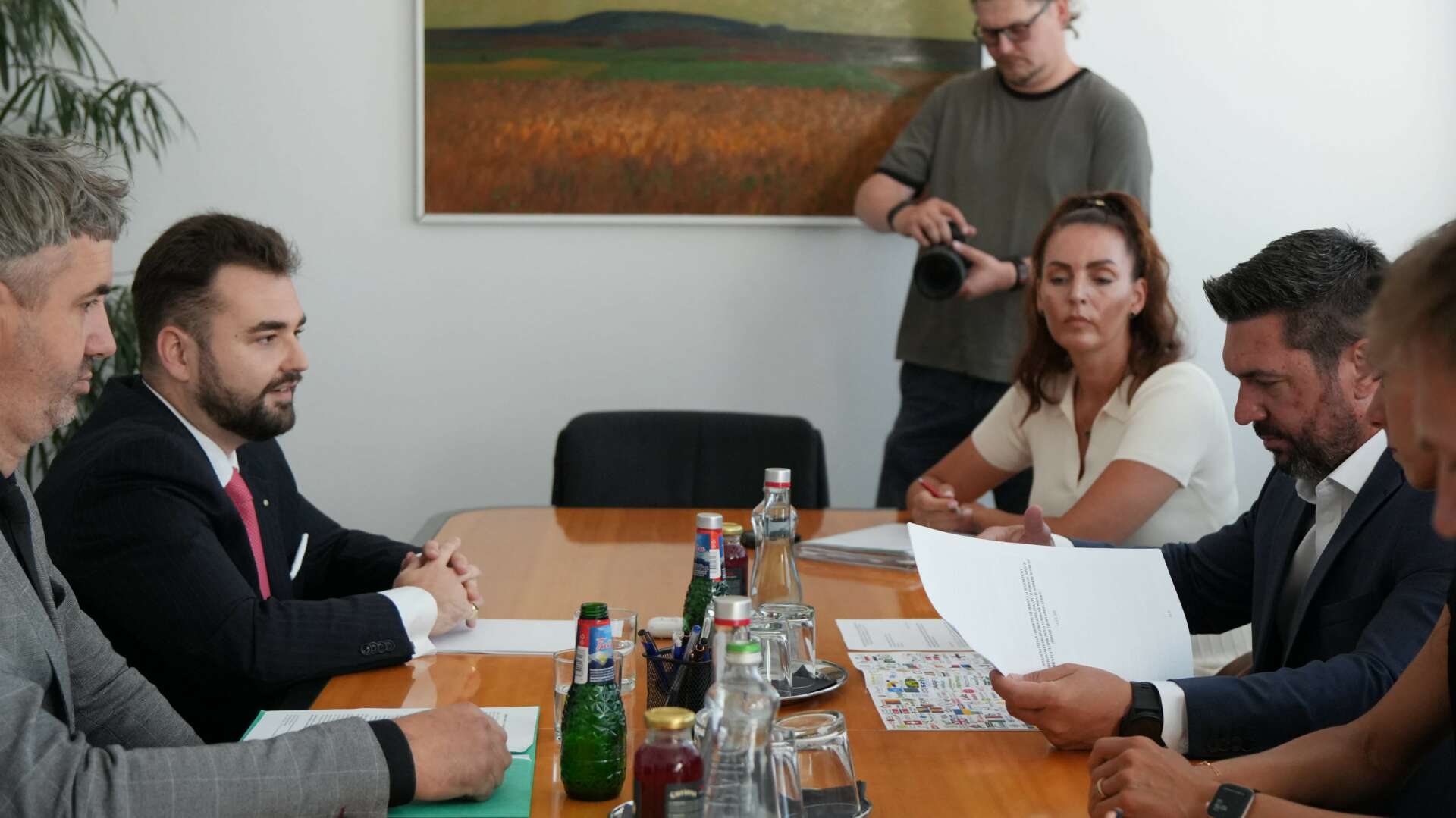
On 14 July, Peter Sudovský of Slovensko bez GMO and Samuel Matejíčka of quid est VERITAS delivered the appeal to Takáč, calling on the Slovak government to bring an annulment action before the CJEU. The appeal, also signed by Save Our Seeds, argues that removing mandatory risk assessment, labelling and traceability for GM plants threatens consumer choice, biodiversity, organic and non-GMO agriculture and food sovereignty. It further argues that the regulation conflicts with the EU precautionary principle, consumer-protection requirements, existing CJEU GMO jurisprudence and the Cartagena Protocol.
Poll finds 75% of Slovaks back court action
On 30 July, quid est VERITAS published a Polis Slovakia poll of 1,002 adults showing strong opposition to the deregulation. Some 80% opposed removing new GMOs from the existing GMO framework, 78% opposed removing mandatory risk assessments and 76% opposed removing mandatory food labelling. The telephone survey, conducted on 21–27 July, also found that 75% supported Slovakia bringing an action before the CJEU to challenge the regulation.
Clash between Slovak Academy of Sciences and ENSSER
In August, the Slovak Academy of Sciences (SAV) issued a statement supporting the new EU regulation, arguing that new GM techniques can contribute to sustainable agriculture and that the DNA changes produced in plants categorised as NGT1 under the new rules can be indistinguishable from those arising through conventional breeding.
ENSSER, the European Network of Scientists for Social and Environmental Responsibility, subsequently published a detailed rebuttal, arguing that new GM techniques can produce unintended genetic changes and that the scientific evidence does not justify abandoning case-specific risk assessment, monitoring and labelling for these GM plants.
‘Extraordinary political consensus’ in Slovakia
“Slovakia has emerged as one of the strongest voices in Europe against the deregulation of new GMOs. At a time when some traditional opponents are stepping back, our government is showing clear leadership in defending environmental protection, consumer choice and sustainable agriculture,” said Samuel Matejíčka, director of quid est VERITAS. He noted that all MEPs from Slovakia voted consistently against GMO deregulation and that this represents an “extraordinary political consensus for Slovakia”.
What happens next
Following the government’s decision of 2 September, Slovakia still needs to lodge the action with the CJEU. The deadline for such an action is understood to be 21 September, based on the CJEU’s rules for calculating the time limit for actions against acts published in the Official Journal.
The case could take a year or more to reach a final judgment. Bringing the action would not, by itself, suspend the regulation. Slovakia could separately apply for interim measures, but any suspension would have to be ordered by the Court.
More information: Beyond GM, GM Freeze
Update 23 September 2026: The case has been registered as Case C‑1034/26, Slovakia v Parliament and Council.
The photo by Maxim Matejíčka shows the handover of the appeal to Minister Richard Takáč on 14 July 2026.