The EU is moving towards weaker rules for genetically modified microorganisms (GMMs) deliberately released into the environment. The Commission says EU GMO regulations are blocking access to products available elsewhere. But the global market for environmental GMMs is tiny, their benefits remain uncertain, and scientists warn that environmental releases could pose risks that are difficult to predict, control or reverse.
Lowering safety standards
In the EU, genetically engineered organisms deliberately released into the environment – whether plants, animals or microorganisms – are subject to detailed risk assessment before they can be authorised for commercial use. Applicants must provide safety data and methods for detecting the organism, and environmental monitoring is required after authorisation. EU authorisations are limited to a maximum of ten years before they have to be renewed.
These safeguards are intended to ensure that genetically modified organisms do not cause harmful effects to people, animals or the environment.
The Commission’s latest proposal would weaken these rules for GMMs deliberately released into the environment. It covers a broad range of organisms including GM bacteria, algae, fungi and viruses. Among other changes, it would remove the requirement to renew authorisations after ten years and reduce requirements relating to risk assessment and analytical detection. It would also create a new category of so-called “low-risk GMMs” for which regulatory requirements could be reduced further. The Commission says the proposal does not affect GMMs used in food and feed production.
On 16 June, the Council of Ministers adopted its position on the proposal, with minor amendments. The next step is for the European Parliament to consider the text.
A regulatory bottleneck – or a tiny market?
Why does the EU want to weaken these safeguards? In a Staff Working Document published in May, the European Commission argues that GMO regulations are blocking market access. It says the EU’s GMO framework has “resulted in no market authorisations for deliberate release …, effectively excluding the EU from the specific parts of global markets in biofertilisation, biocontrol, bioremediation, and bioleaching using GMMs.”
Indeed, the EU has not authorised the commercial release of GMMs for such purposes. Environmental releases of GMMs have been limited to experimental uses and certain medicinal applications, which are subject to specific regulatory frameworks.
However, even in countries with less stringent GMO rules, only a handful of non-medicinal GMM products have reached the market. This suggests that regulation is not the only obstacle. Designing GMM products that perform reliably in complex natural environments while also making commercial sense presents substantial technological and market challenges of its own.
What is the EU actually missing out on?
The Commission claims that EU economic sectors, particularly agriculture, industry and environmental services, are disadvantaged because they cannot easily use “novel tools available in third countries”.
But what are these tools? According to the Commission’s own Staff Working Document, just four relevant GMM products or product families are currently on the market outside the EU. Two are long-established biopesticides. One is a genetically engineered strain of Bacillus thuringiensis from Certis Bio, approved in the United States in 1996. The other is a modified Rhizobium rhizogenes from BioCare Technology, authorised in Australia as early as 1993.
The two more recent products are a biofertiliser from Pivot Bio, marketed in the United States since 2019, and Lumina, a genetically modified dental-care product from Lantern Bioworks, which entered the US market in 2023. Since these products have reached the market without meaningful regulatory scrutiny, there is practically no safety information publicly available to judge their potential adverse effects.
The Commission’s overview appears to leave out several other products, including two more genetically modified Bacillus thuringiensis products, one from German company BASF and one from Chinese company Wuhan Keno Biotechnology Co.
Even taking these additional examples into account, however, the list of “novel tools” unavailable to EU operators remains short and unimpressive.
Heightened biosafety concerns
The proposed changes are particularly concerning because engineered microorganisms pose specific challenges when deliberately released into the environment.
Many microorganisms reproduce rapidly and can evolve quickly. They live within complex microbial communities whose interactions are still only partly understood. Some also exchange genetic material with other organisms. Once released, engineered microbes may spread beyond the site where they were intended to act and interact with organisms and ecological networks in ways that are difficult to predict in advance.
Scientists from the Germany Ecological Society have warned that the proposed changes, particularly the introduction of a “low-risk GMM” category, are not consistent with current scientific knowledge and could create major environmental risks.
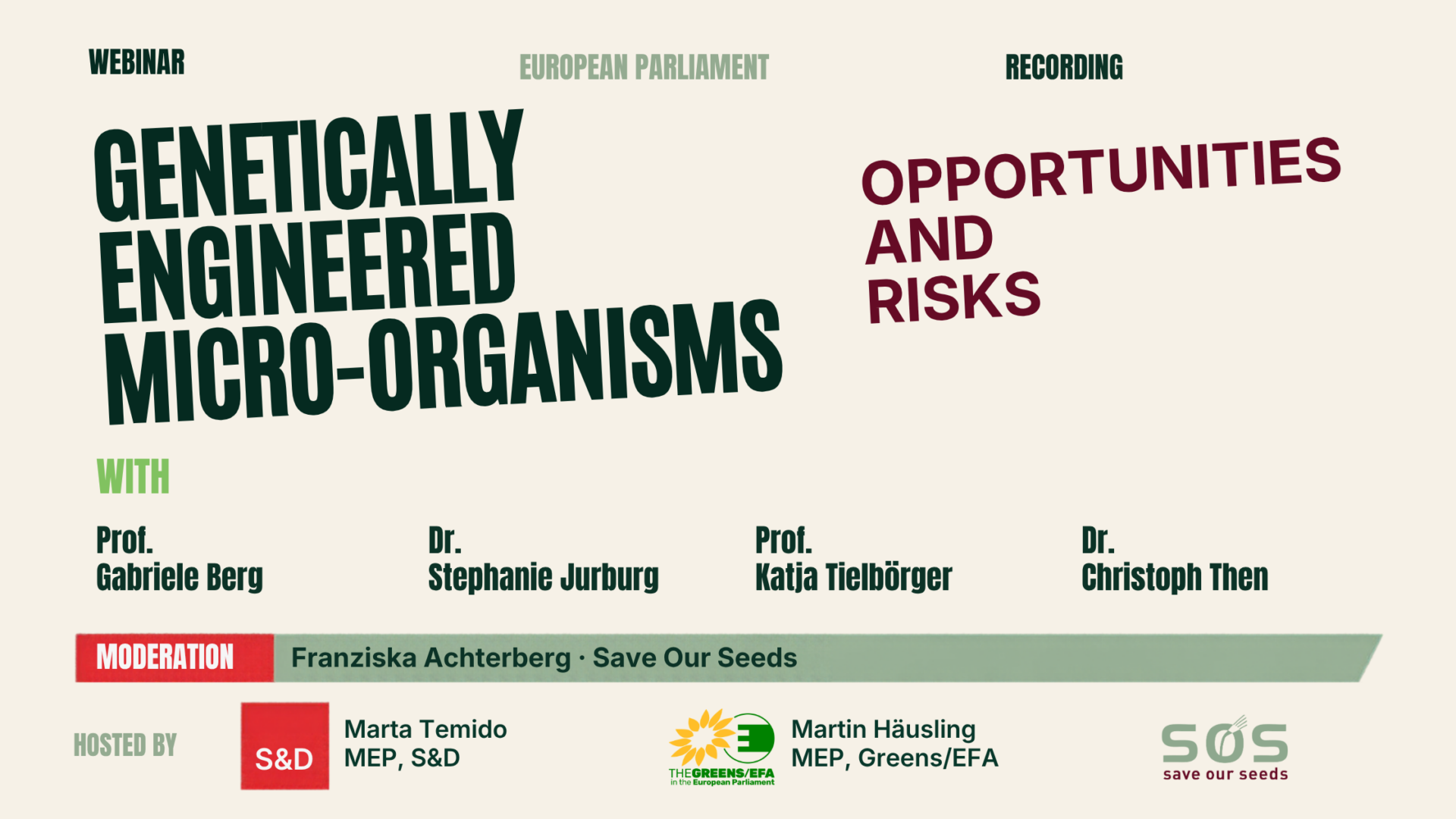
Professor Gabriele Berg, a leading microbiome researcher, has similarly warned that “the growing pressure to lower barriers for environmental GMM application should not compromise robust, science-based safeguards”. She stressed: “It is important to foster innovation but not at the expense of health, environmental integrity, or long-term biosafety. Once GMMs are released, control and recall are inherently limited.”
When exposure cannot be controlled
The example of Lantern Bioworks’ dental care product included in the Commission’s own overview – and described in our briefing here – illustrates another problem: who gets to decide whether people and ecosystems are exposed to a genetically modified microorganism?
Lumina contains a genetically modified strain of Streptococcus mutans designed to establish itself in the human mouth and provide permanent protection against tooth decay after a single treatment. The organism can spread between people, meaning exposure would not necessarily be limited to the person who chooses to use the product.
That raises questions that go beyond conventional product safety: public consent, accountability and democratic oversight.
What happens next?
The Council of Ministers has already adopted its position on the Commission’s proposal, with minor changes. The European Parliament is still debating the text. A committee vote is planned for 5 November, with a plenary vote potentially following soon afterwards. Parliament and the Council will ultimately have to agree on a common text.
If environmental GMMs are the next generation of biotechnology, the EU should lead with rigorous science and effective oversight – not race to remove the rules designed to protect people and ecosystems.
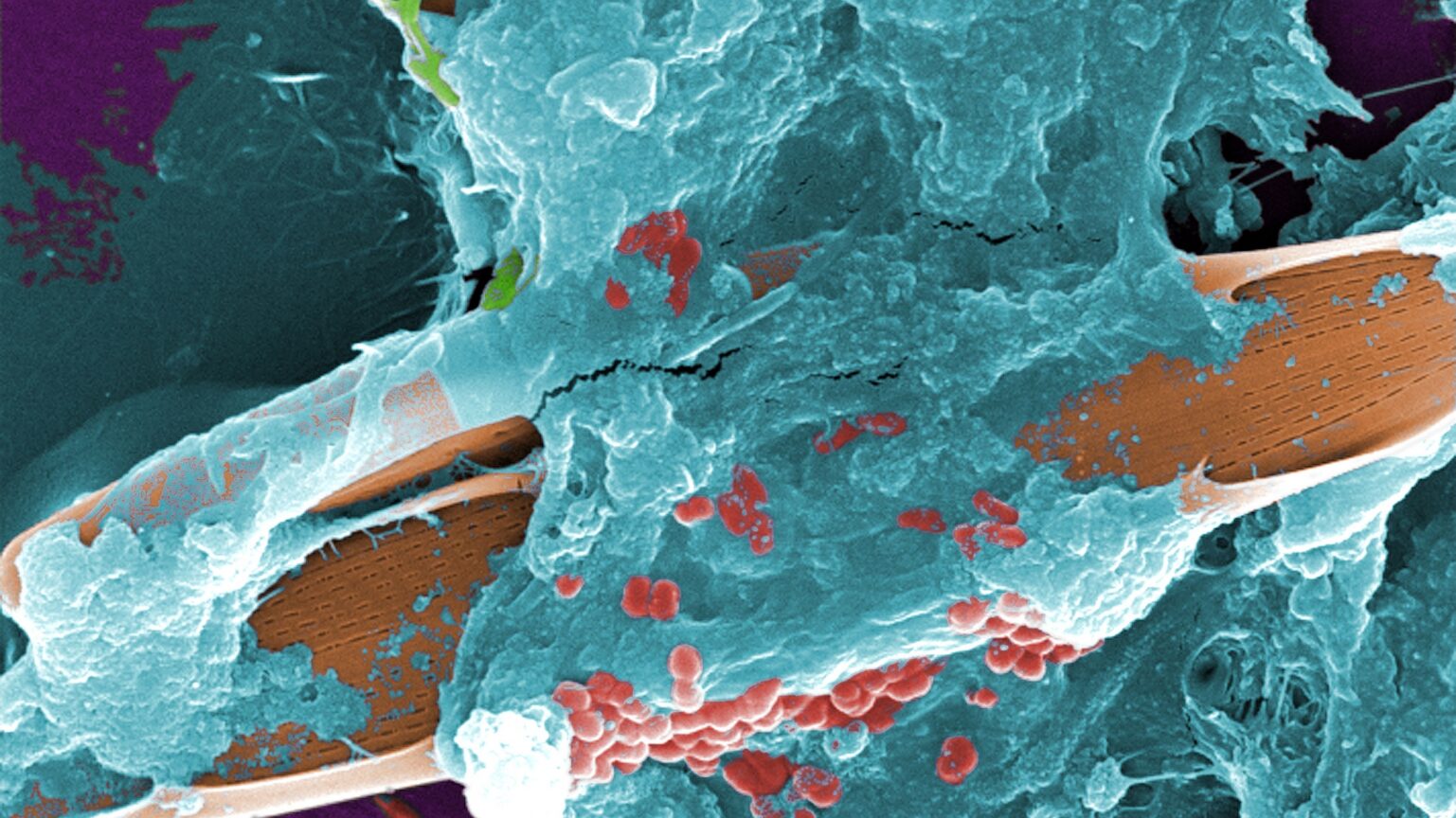
The image shows “Bacteriophages at work” — Bacteriophages at different levels of magnification (attached to bacterial cell wall/in petri dish). ©Emily Brown