The successful creation of functional new-to-nature viruses designed by artificial intelligence has prompted renewed calls for stronger oversight of synthetic biology and AI-enabled genome design. In the EU, meanwhile, discussions are focussed on preventing the malicious misuse of biotechnology, while paying little attention to the biosafety questions raised by increasingly capable AI genome design tools.
AI model designs new-to-nature viruses
In a new study published in Science, researchers from Stanford University and the Arc Institute used artificial intelligence (AI) to generate viruses that do not exist in nature. They used a genomic language model called Evo 2 to generate complete genomes of bacteriophages – viruses that infect bacteria. Evo 2 has been released as an open-source model, making its genome design capabilities freely available to researchers and other users.
After synthesising and testing hundreds of AI-generated genome designs, the researchers found that sixteen produced viable viruses capable of infecting Escherichia coli. Some performed as well as, or better than, the naturally occurring virus that served as the starting point for the study.
The work marks a significant milestone in synthetic biology because it demonstrates that generative AI can design complete functional viral genomes rather than individual genes or proteins. Previous AI applications have largely focused on predicting protein structures or designing shorter DNA sequences.
The researchers emphasise that the work was deliberately restricted to bacteriophages, which infect bacteria rather than humans, animals or plants. They excluded viruses capable of infecting more complex organisms from the model’s training data. The stated objective was to explore whether AI could accelerate the development of phage therapy, an approach that uses viruses instead of antibiotics to combat bacterial infections.
Although bacteriophage genomes are relatively small and comparatively easy to engineer, project leader Brian Hie said the same approach could eventually be extended to bacteria and progressively more complex organisms.
Scientific milestone raises governance questions
The study has intensified debate about the governance of AI-enabled genome design. In a commentary published alongside the research, Thomas Inglesby and Moritz Hanke of the Johns Hopkins Center for Health Security argue that the work raises “urgent biosafety and biosecurity questions”. Although they commend the researchers for incorporating safety measures into the project, they believe existing governance frameworks are insufficient for overseeing this type of project. The challenge, they write, is no longer whether AI will be able to design functional viral genomes, but whether governance can evolve quickly enough to ensure that these capabilities are used safely.
Other experts have expressed similar concerns, arguing that oversight mechanisms have not kept pace with advances in AI-assisted biological design and calling for stronger safeguards covering AI models, DNA synthesis, laboratory biosafety and international governance.
The research shows how advances in genetic engineering are increasingly intertwined with advances in AI. Ensuring that innovation is accompanied by robust oversight, transparency and effective biosafety measures will become an increasingly important challenge for policymakers worldwide.
EU addresses some biosecurity concerns
In the European Union, a recent legislative proposal on biotechnology, termed “Biotech Act I”, aims to encourage the uptake of AI in biotechnology. It also seeks to ensure that Europe’s biotechnology expansion does not increase risks of deliberate misuse of “biotechnology products of concern”. One proposed measure is a harmonised EU framework for screening synthetic DNA orders to ensure malicious actors cannot create dangerous pathogens or toxins.
However, while the proposal recognises AI as an important enabler of biotechnology and introduces stronger controls over DNA synthesis, it leaves many questions about how AI-enabled genome design should be governed – nor does it address the broader biosafety issues raised by this type of research.
Indeed, in a separate proposal accompanying the Biotech Act, the European Commission proposes changes that would reduce the regulatory oversight of genetically modified microorganisms, including bacteria, fungi and viruses, potentially weakening protections against health and environmental risks associated with their release.
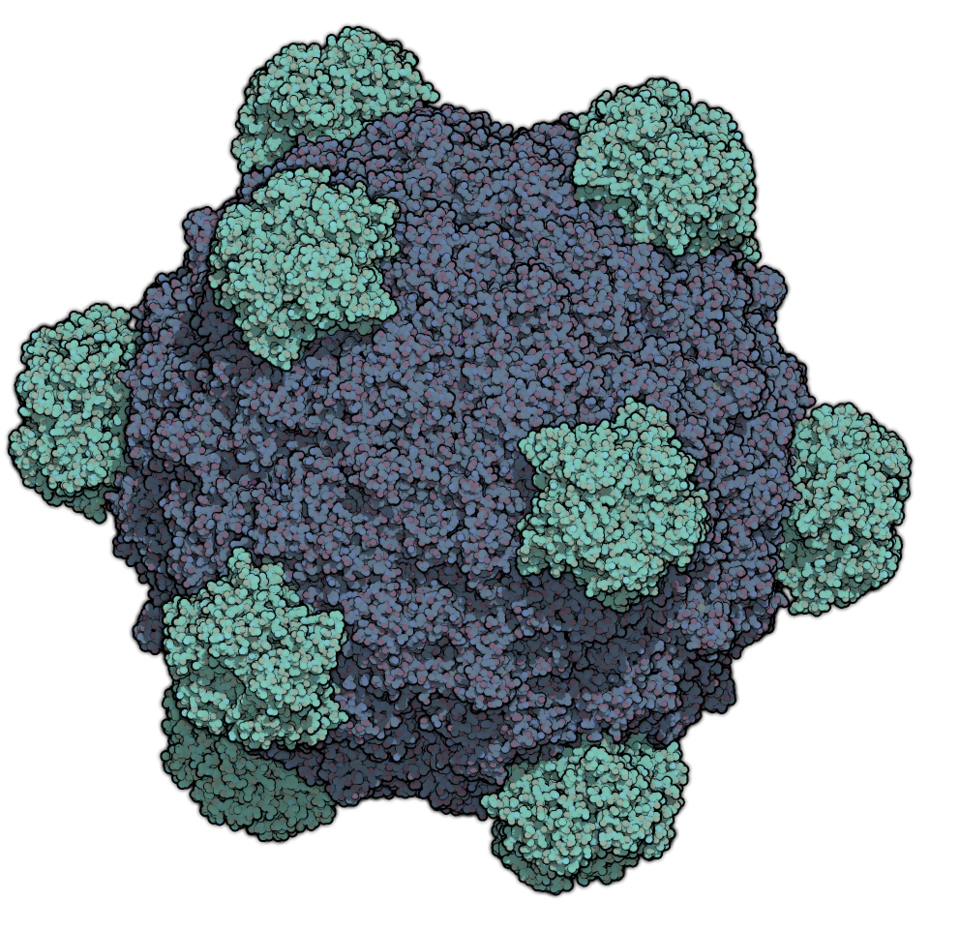
This image shows the capsid (protein shell) of bacteriophage ΦX174 (Phi X 174), a small icosahedral virus that infects E. coli bacteria.