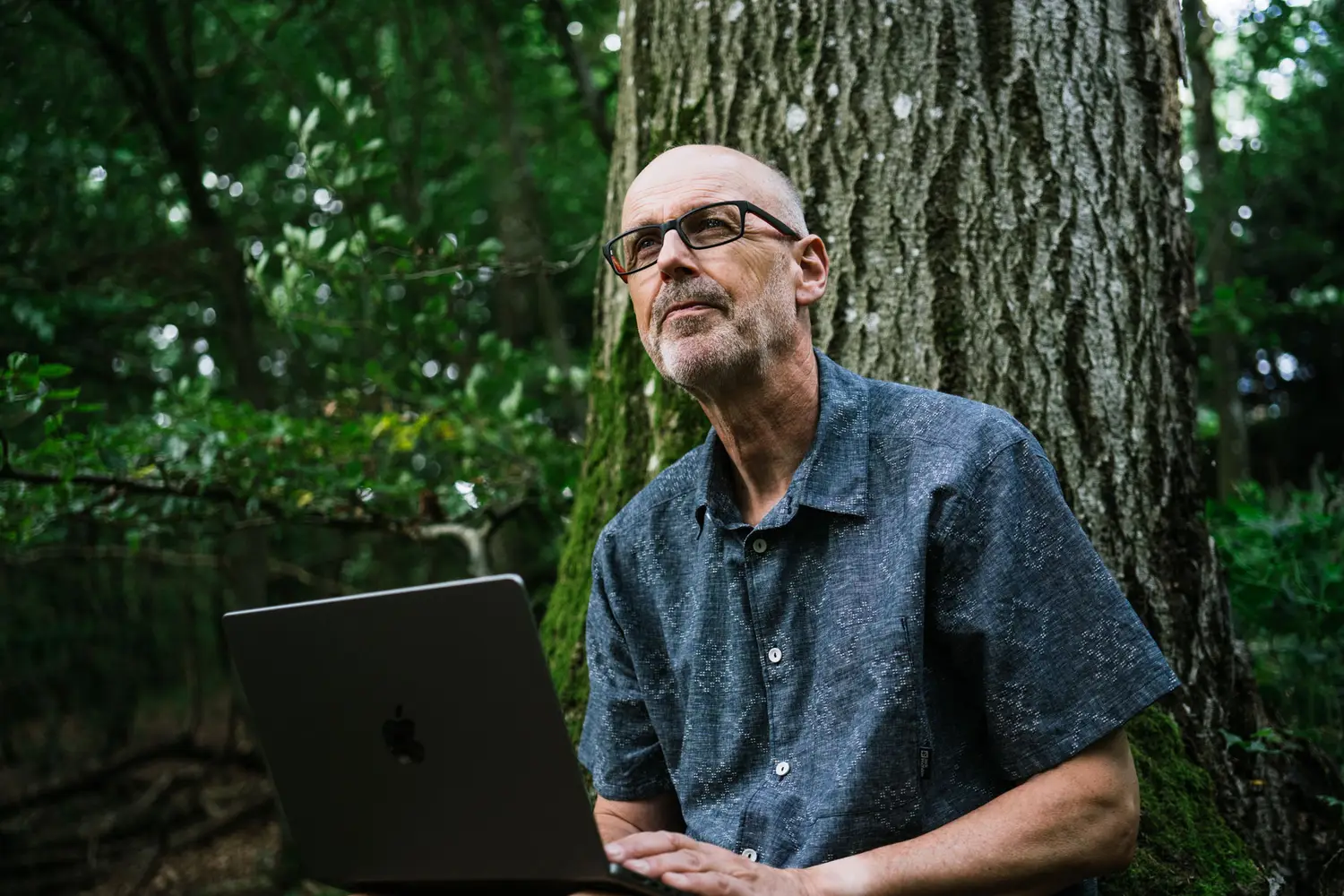
An interview by Judith Duesberg of GeN – the Gen-ethical Network – with Peter Wohlleben.
A holistic perspective on the environmental release of genetically engineered bacteria
The European Commission plans to significantly weaken the rules governing the release of genetically modified microorganisms (GMMs) into the environment, removing important precautionary safeguards. In this interview, Peter Wohlleben and Judith Düesberg of the Gen-ethisches Netzwerk discuss the vital role bacteria play in humans and nature, as well as how society should approach the limits of its knowledge.
Judith Düesberg: Mr. Wohlleben, in your new book, you describe bacteria as unsung heroes.¹ Do we underestimate their importance to humans and nature?
Peter Wohlleben: Yes, we generally underestimate the importance of bacteria. They are involved in practically everything. For example, a new study suggests that bacteria may even play a role in human reproduction.² Although bacteria are not necessarily present in the fallopian tubes or in the placenta, they appear to trigger immune responses in early pregnancy that influence the implantation of the embryo and placental development. Apparently, this happens through the release of tiny vesicles, which are so small that they can pass through tissue and deliver chemical information to the reproductive organs.
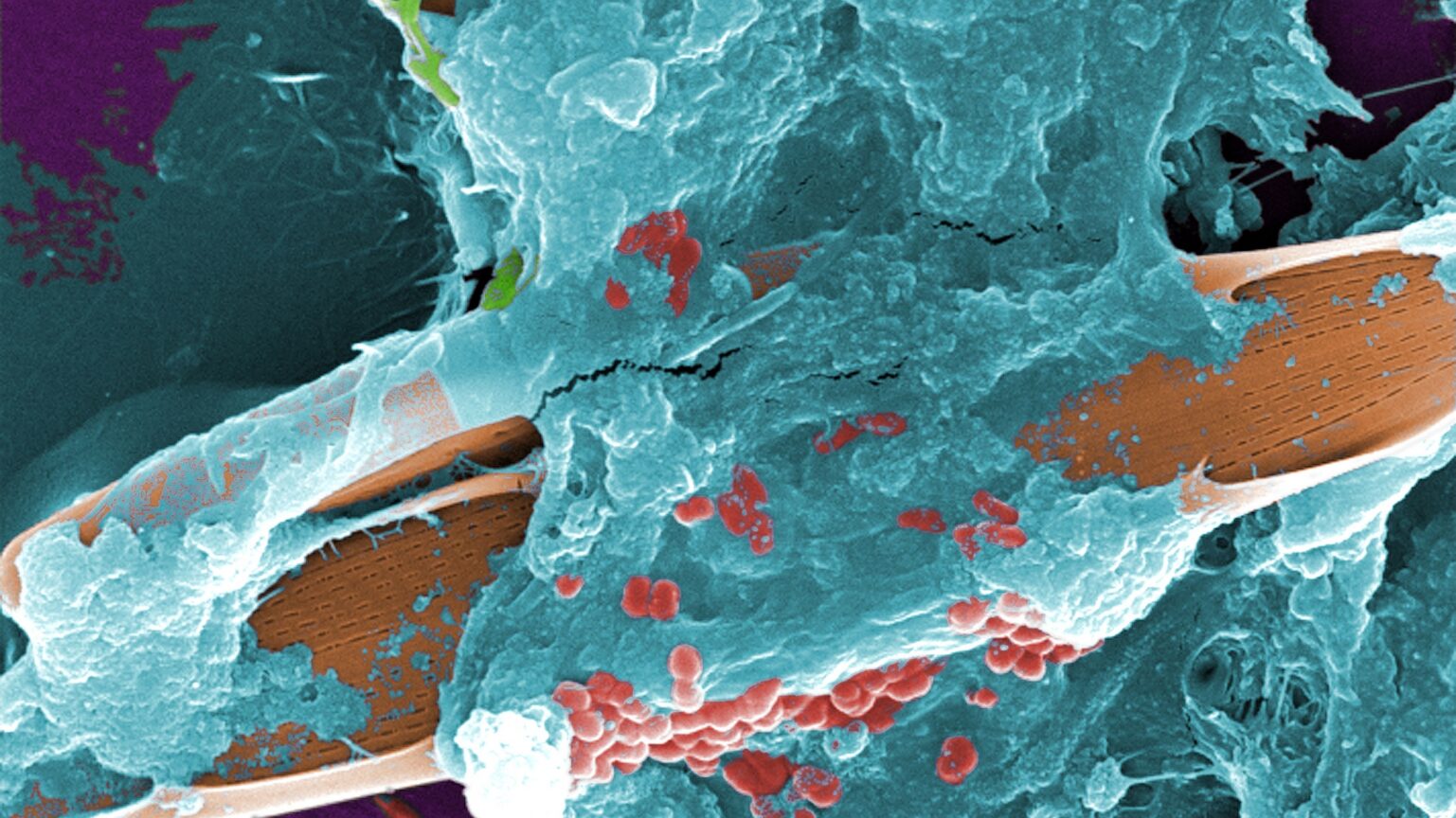
This is an example of how bacteria are, in principle, involved in almost every form of life. They influence not only the animals and plants in which they reside, but also help regulate these organisms. They also affect soil formation, the climate, and similarly far-reaching processes. It is difficult to overstate the role of bacteria.
Judith Düesberg: Yes, you make that very clear. Can you also give us some examples of how humans use bacteria for their own purposes?
Peter Wohlleben: We use bacteria in everyday life, for example in food production, such as making yogurt. Bacteria are deliberately used to convert milk sugar into lactic acid, which thickens the milk.
Nowadays, genetically modified (GM) bacteria are also used to make things like insulin. Researchers at Charité University Hospital are even looking into using bacteria as disinfectants.³ They add beneficial bacteria to cleaning products, hoping they’ll push out the bacteria that make us sick. The results are similar to those of chemical cleaning products. The idea of harnessing bacteria for human purposes has been around for a long time.
Judith Düesberg: In your book, you devote an entire chapter to genetic engineering and explain how humans exploit bacterial systems to manipulate genetic information in organisms. At the EU level, a process is underway to substantially weaken safety standards and precautionary measures governing the release of GM microorganisms into the natural environment. What is your view on this?
Peter Wohlleben: I am completely opposed to it.
Broadly speaking, you could say that the molecular biology tools humans now use to deliberately modify genetic material were invented by bacteria. This is because most bacteria have the ability to take up foreign genetic information and pass it on.
For millions of years, bacteria have been cutting up DNA and taking up genetic material from other organisms. This tendency to pick up genetic material can be quite risky. Manure, for example, can contain wild bacteria carrying antibiotic resistance genes, even if those bacteria have never been exposed to antibiotics. These bacteria take up genes from other bacteria and incorporate them into their own genomes, thereby acquiring antibiotic resistance.
Studies in Canada show that wild plant populations also acquire genes from GM crops. So there’s a vast exchange of genes and genetic components going on out there in nature – on a scale we probably can’t even imagine. After all, it’s estimated that 99.9% of all bacterial species have yet to be discovered. To start manipulating and releasing genetic information on the basis of such limited knowledge is, in my view, utterly irresponsible.
Judith Düesberg: You describe bacteria as highly interconnected participants in ecosystems. They are part of the microbiomes of plants, animals, and humans, and therefore have a direct influence on their health and well-being. What is your view of the EU proposal to drastically scale back environmental risk assessments for GM bacteria that meet certain general criteria?
Peter Wohlleben: To assess the potential risks to human health and the environment, it is absolutely essential to look at the interactions involved. This point cannot be stressed often enough: as long as we know next to nothing about the vast majority of bacteria, we also have no idea what kinds of interactions they might have.
Take the soil beneath our feet, for example. Scientists have estimated that a single handful of beech forest soil – around 30 grams – could contain up to a million bacterial species. Yet only around 20,000 bacterial species have been described worldwide. These figures show just how little we know about the microbial world.
What we do know is that bacteria are among the largest groups of life forms and are particularly active in exchanging genetic information. All GM organisms eventually become organic waste. At the same time, every square millimetre of soil is teeming with single-celled organisms that could incorporate their genetic sequences into their own DNA.
I consider the release of GM bacteria to be at least as risky as an AI system spiralling out of control. Here, too, the idea is that the technology can be contained, even though we no longer fully understand how autonomously AI operates or what paths it might take. In the case of GM bacteria, the risks of unpredictability and loss of control are at least as great.
Judith Düesberg: On top of that, AI is now being used to design new traits and genetic sequences. That makes it even more difficult to assess and control the risks, doesn’t it?
Peter Wohlleben: Exactly. I think this is extremely risky! My small hope is – and this is a hope, not scientific evidence – that bacterial ecosystems are resilient to intruders. We know that bacteria have defence mechanisms. They can fight off foreign bacteria and defend their own ecosystems. And GM bacteria are, first and foremost, foreign to other bacteria. Perhaps it doesn’t make that much difference whether humans intervene as well. But, as I said, we simply know far too little.
The point is that we’re not just modifying bacteria; we’re also changing the environment of the animals and plants that interact with them. These organisms have to cope with the bacteria and their altered properties. We know from wild plants that they can take up genetic sequences from GM plants and acquire new traits as a result. This shows that it’s not just genes that are altered over time, but other organisms too. We simply cannot predict the consequences, because new genetic engineering techniques – and also GM bacteria on a larger scale – haven’t been around long enough for us to understand their long-term effects.
Judith Düesberg: Indeed! The experience we do have is with growing GM crops. But we can’t extrapolate from that to GM bacteria, because the two groups differ fundamentally. Nevertheless, bacteria now are supposed to be genetically modified and released into nature. What do you think of the idea of giving bacteria protected status because of their particular importance?
Peter Wohlleben: Yes, that would make sense. One important question is: who is modifying which bacteria, and for what purpose? If these are bacteria that will eventually come into contact with humans, there’s a considerable risk that they could also affect our microbiome. That is, unless the bacteria are used exclusively in contained settings, for example to produce synthetic medicines. But that is not the purpose of the EU proposal, which is intended to make it easier to release GM bacteria into the environment.
All I can say is that this is a black box. It’s important to understand how much we are still learning about bacteria. One example is the extent to which bacteria influence the mental health and behaviour of mammals. Research into this area only began to gain traction in the 2000s.⁴
Another example concerns the environment: bacteria appear to play a much greater role in cloud formation, and especially in the formation of raindrops, than previously thought.⁵ Large numbers of these bacteria are found on plant leaves.
Now, let’s suppose that these particular bacteria were disrupted by genetically modified bacteria and consequently lost their ability to produce specific protein molecules that help raindrops form. The result could be a substantial reduction in rainfall, seriously jeopardizing food security and groundwater replenishment. And the consequences could be irreversible.
We now know that bacteria play a role in cloud formation, but this was not always understood. We must recognize that there is much more we do not yet understand. In my view, we should not take this risk, even if the probability of harm were low.
Judith Düesberg: You often emphasize how little we actually know. In your view, are we as a society dealing adequately with the limits of our knowledge?
Peter Wohlleben: No. We don’t even handle knowledge adequately, as we can see from the fact that fewer and fewer people are able to distinguish between facts and knowledge. Assessing what we don’t know would be the next level.
Once we recognize what we don’t know, that recognition must guide our actions. Not knowing essentially means that, from that point on, we need to proceed with caution and factor in potential risks. We should go only as far as our established knowledge allows – and wherever we venture beyond that territory, there should be a stop sign.
Judith Düesberg: Thank you very much for the interview!
Read the original interview on the Gen-ethical Network.
Foto: Tobias Wohlleben
References
- Wohlleben, P. (2026): Bakterien – die heimlichen Helden. Malik Verlag.
- University Medicine Greifswald (September 9, 2026): “Winzige Bakterienbläschen und ihr Einfluss auf die Fruchtbarkeit.” Online: https://www.unimedizin-greifswald.de/de/extrazellul%C3%A4re-bakterielle-vesikel/
- Blech, J. (April 29, 2022): “Bakterien als Desinfektionsmittel im Krankenhaus.” Online: https://www.spiegel.de/wissenschaft/bakterien-als-desinfektionsmittel-im-krankenhaus-a-b2838564-a06e-43e2-be55-9c937dc2306c
- Sudo, N. et al. (2004): “Postnatal Microbial Colonization Programs the Hypothalamic-Pituitary-Adrenal System for Stress Response in Mice.” The Journal of Physiology, 558(1), pp. 263–275. https://doi.org/10.1113/jphysiol.2004.063388
- Gao, K. et al. (2025): “On the Drivers of Ice-Nucleating Particle Diurnal Variability in Eastern Mediterranean Clouds.” npj Climate and Atmospheric Science, 8, article 160. https://doi.org/10.1038/s41612-024–00817‑9