Today, 36 civil society organisations from 12 countries wrote to Members of the European Parliament (MEPs) calling on them to reject plans to lower EU safety requirements for the environmental release of genetically modified microorganisms (GMMs), including bacteria, yeasts, algae and viruses. The appeal follows an earlier call from European ecological scientists to maintain robust safeguards for the release of GMMs into the environment.
Broad coalition urges caution
Save Our Seeds has joined organisations working in environmental protection, consumer rights, agriculture, beekeeping, food production and science in calling on the European Parliament to retain strict regulation of GMMs released into the environment.
Our organisations argue that existing safeguards should not be weakened while the technology is developing rapidly. Advances in genetic engineering, including its growing convergence with artificial intelligence, are expanding the capacity to create microorganisms with novel genetic characteristics that may have no direct counterpart in nature. This rapid technological development makes robust regulations all the more important.
What has been proposed?
The Commission proposal, presented on 16 December 2025 as part of the European Biotech Act, would amend Directive 2001/18/EC to introduce specific rules for the commercial release of GMMs into the environment. The Commission describes it as a more tailored and streamlined framework intended to maintain a high level of safety.
The Council already adopted its General Approach in June, with only minor amendments to the Commission text.
In principle, the proposal does not cover GM microorganisms used in food and feed, which are subject to separate EU legislation. It concerns GMMs intended for uses such as biofertilisers, biopesticides and the bioremediation of polluted sites. GMMs marketed as cosmetic products would be covered, whereas GMMs used as feed additives would not.
While the EU has some experience with the regulation of GM plants, no GM microorganism has so far been authorised for placing on the market under the EU GMO framework. Nevertheless, the Commission makes the following proposals to reduce the existing requirements for the deliberate release of GMMs into open ecosystems:
- Unlimited authorisations: authorisations for placing GMMs on the market would no longer be limited to 10 years. The Commission says this would reduce the administrative burden for operators and national competent authorities.
- Reduced information requirements: information requirements would be “adapted” to take account of the specific characteristics of GMMs, although Directive 2001/18/EC already allows certain flexibility in the information required.
- Reduced detection requirements: requirements concerning the detection, identification and quantification of GMMs would be adapted where it is “not feasible” to provide an appropriate method. This could limit the capacity to monitor the spread of released GMMs and to detect the transfer of genetic modifications to other organisms within microbial communities.
In addition, the Commission proposes a new category of “low-risk GMMs” that would benefit from a more streamlined authorisation procedure and reduced information requirements. In certain cases, post-market environmental monitoring could also be waived.
To qualify for this category, a GMM would have to meet three conditions: the microorganism would have to be “well-characterised”, it would have to appear on the EU list of microorganisms with a Qualified Presumption of Safety (QPS), and it would have to contain no “genes of concern” that are not already present in the parental organism.
Ecological scientists call for removal of “low-risk” category
In their recently published critique of the EU proposal, members of ecological science societies from across Europe call for the proposed “low-risk” GMM category to be removed. They argue that there is currently “no comprehensive framework for quantifying GMM-associated risks across all microbial taxa, genetic locations of modifications, and types of modifications”. They call for such a framework to be “developed urgently” before a hypothetical “low-risk” category is introduced that could create major and potentially irreversible environmental risks.
The scientists warn that “GMMs will evolve and spread fast and interact with myriads of other organisms”, potentially destabilising local ecological interaction networks and displacing native microbiota. They argue that simply classifying certain GMMs as “low-risk” does not resolve the fundamental uncertainty surrounding their use in agricultural and natural environments.
In addition to removing the proposed “low-risk” category, the scientists call for case-specific, “ecologically informed” environmental risk assessments; mandatory long-term monitoring; basic checks on the functioning of proposed GMMs through “meaningful but highly confined field trials”; and time-limited authorisations adapted to the biology of GMMs.
MEPs urged to maintain strong safeguards
The 36 organisations behind the joint appeal similarly call on MEPs not to weaken EU safety standards for GMMs. They call for all GMM authorisations to remain time-limited and subject to periodic renewal, with reliable detection methods and case-specific environmental monitoring required in every case. They also demand the “urgent enhancement of risk assessment methodologies and post-release monitoring systems” and full, case-specific environmental risk assessment in line with current standards.
Particular attention should be given to microorganisms that are known to be essential components of the microbiomes of soils, plants, animals and humans. The organisations argue that these microbial communities play fundamental roles in healthy ecosystems, food production and human and animal health and therefore require the highest level of protection. Where the unintended spread of a GMM cannot be effectively controlled or mitigated, they argue that authorisation should not be granted.
What is next?
The European Parliament’s Environment and Public Health Committees are expected to vote on the proposal on 4 November. The plenary vote is scheduled for the Parliament’s Brussels mini-plenary on 11–12 November. Once the Parliament has adopted its position, trilogue talks will begin with the Council and the Commission to agree on a final text.
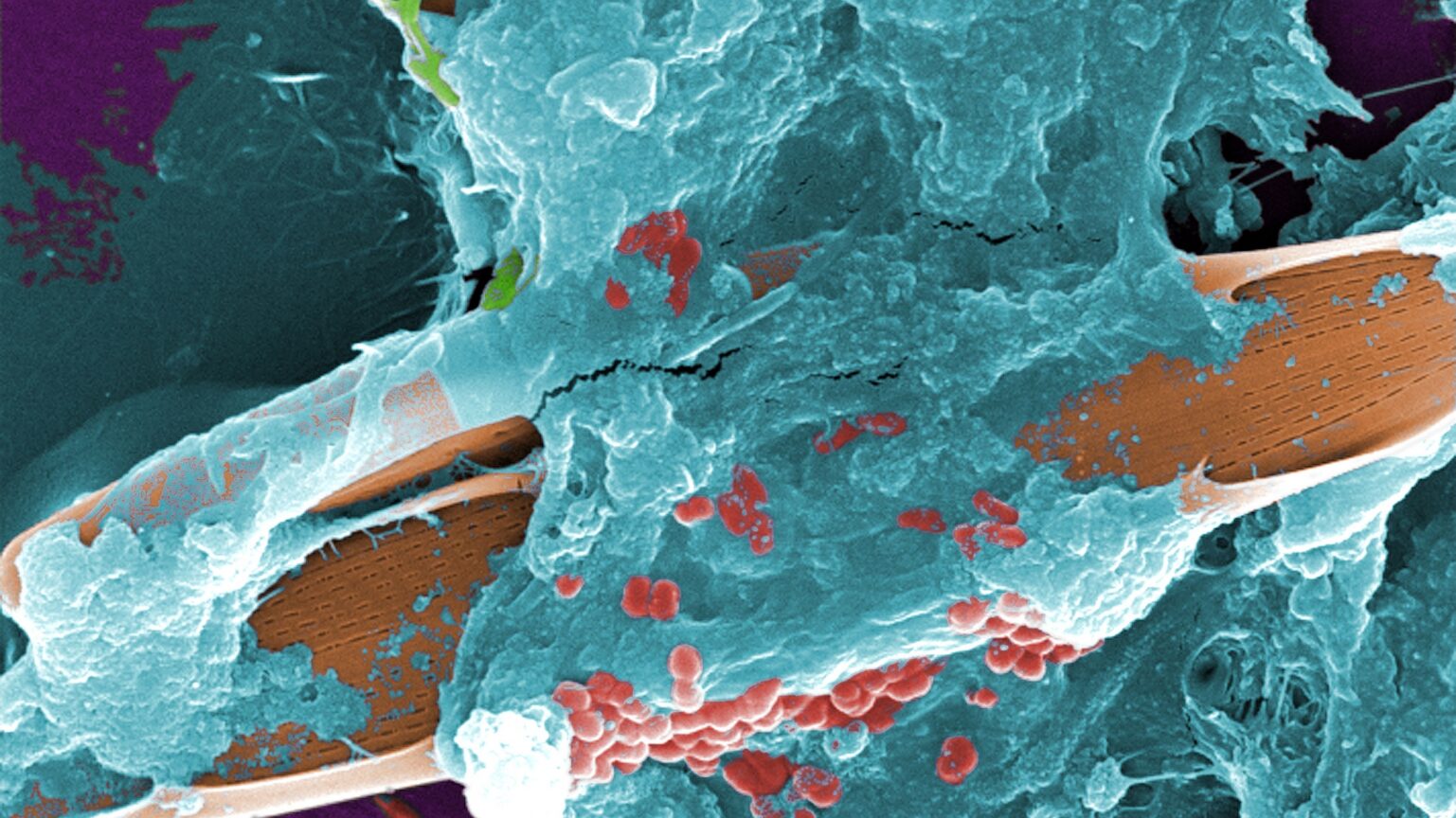
Image: Digitally colorized microscope image of a wild-stream sample showing bacteria, protozoa, and algae. © Janice Haney Carr