
Berlin and Brussels, 23 January 2025 – A new report released today by Save Our Seeds highlights the increasing use of generative Artificial Intelligence (AI) in the development of genetically modified (GM) plants, raising significant new concerns about their safety.
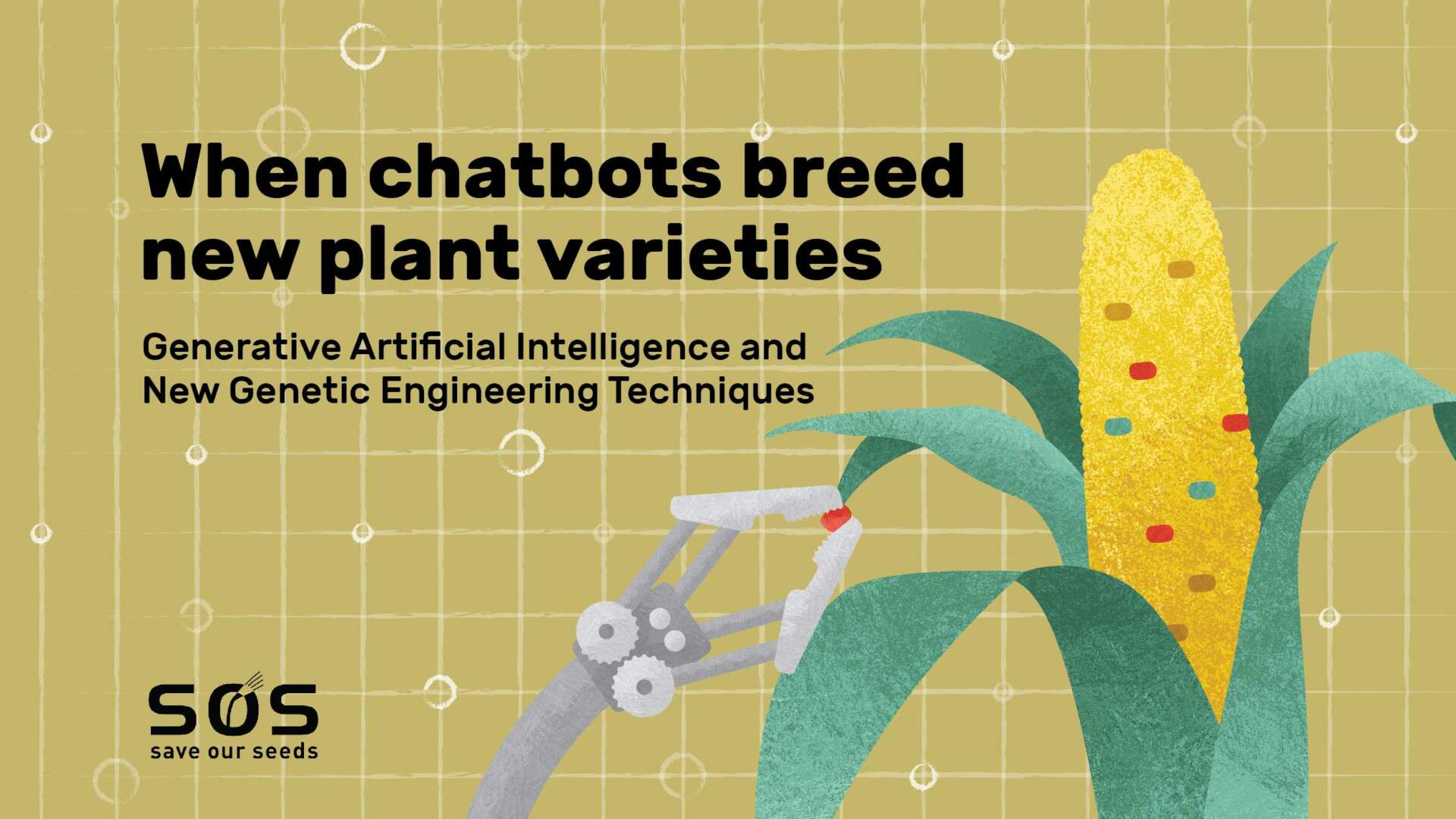
The increasing use of generative artificial intelligence (AI) tools is driving a profound transformation in plant genetic engineering. On the one hand, AI could enhance the precision and efficiency of CRISPR gene editing. On the other hand, AI-driven genetic engineering is susceptible to well-known limitations of AI, such as the black box effect, hallucinations and data errors, raising significant concerns about the safety of engineered plants.
In a letter to Polish agriculture minister Siekierski, 30 organisations — including NGOs and businesses working across Europe in the areas of food and farming, and environmental protection – have protested the latest compromise proposal on GMO deregulation.
Brussels, 8 January 2025 – On January 7, 2025, the Polish EU Presidency released a new compromise proposal on the deregulation of plants genetically engineered through gene-editing techniques like CRISPR-Cas. The proposal does little to address the significant regulatory gaps created by this draft law.
A group of EU organisations have asked Polish agriculture minister Siekierski to defend the EU model of farming by making sure our EU legislation protects farmers and breeders against patented GM seeds and allows consumers to choose GMO-free food.
At COP16, parties should reaffirm the ‘broad and regular’ horizon scanning and agree on the next steps in the CBD’s Synthetic Biology program.
Synthetic biology is not merely a tool for conservation but represents a paradigm shift that demands careful, thoughtful consideration before application.
National and international civil society organisations asked the IUCN Policy Development Working Group on Synthetic Biology to halt the development of the relevant IUCN policy until all criteria for inclusive participation and impartial oversight are fulfilled.
Nairobi, Kenya, 17 May 2024 — Parties to the United Nations Convention on Biological Diversity (CBD) are currently discussing controversial technologies in Nairobi. One such technology is engineered gene drives, a form of extreme genetic engineering designed to spread its modification throughout an entire species and persist in the environment.
Following Conference of Parties 15 (COP15), a multidisciplinary Ad Hoc Technical Expert Group (mAHTEG) on Synthetic Biology was formed. In early 2024, the mAHTEG issued a set of recommendations to the SBSTTA, outlining a methodology for the ‘broad and regular’ horizon scanning process. Drawing on the work of the mAHTEG, the Parties at SBSTTA 26 should: 1 — Agree the…