A plenary vote scheduled for 19 May has been postponed after MEPs tabled 37 amendments to the compromise deal hammered out between negotiators from Parliament, Council and Commission in December. The delay gives NGOs, businesses and citizens more time to pressure MEPs to improve the deal.
Following the formal adoption by EU ministers on 21 April, the trilogue compromise on a new law governing genetically modified plants engineering with ‘new genomic techniques’ must still pass a vote in the European Parliament. As usual, the parliamentary process starts in the responsible committee, then moves to the plenary.
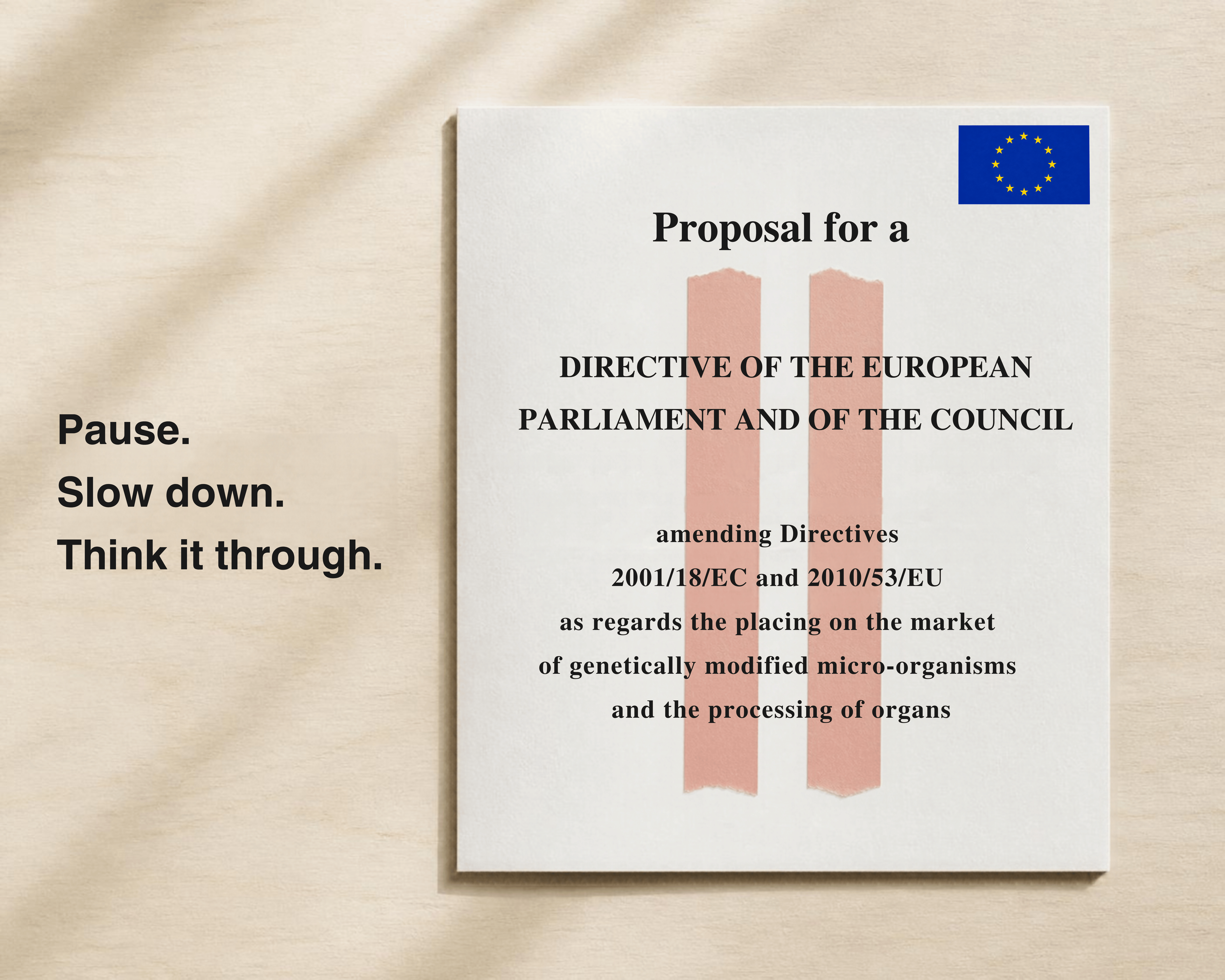
On 4 May, Esther Herranz García, Vice-Chair of the European Parliament’s Environment Committee, announced that the Committee vote on the EU’s proposed legislation on plants engineering with new GM techniques would be postponed. The reason? Thirty-seven amendments had been tabled that needed translation before the vote.
Proposed amendments
Tabled by Socialists, Greens and the Left, range from full rejection of the text to bringing back key demands dropped by the Parliament’s negotiators during trilogue negotiations: consumer labelling, food chain traceability and restrictions on patentability.
These amendments are critical to safeguard GMO-free farming and consumers’ right to know, and to protect organic plant breeding. Prior to the decision to postpone the vote, Save Our Seeds, along with almost 100 other organisations representing civil society, farmers, breeders and businesses, had asked MEPs to defend the European Parliament’s original position on consumer labelling, traceability and patents.
Six prominent retailers, including one of Europe’s largest food retailers, Rewe Group, had also called on Environment Committee members to vote for mandatory labelling and traceability for all NGT products, as well as effective protection against patents on plants and seeds.
By contrast, business associations ranging from seed breeders to farm machinery and food producers had urged MEPs to support the trilogue compromise and reject any proposed amendments.
Mounting public pressure
In the meantime, more than 600,000 people have signed a petition to “protect GMO labelling” proposed by campaign group Eko. In Germany alone, over 145,000 citizens supported a call to reject the proposed law.
A coalition of 52 organisations across several sectors – including Save Our Seeds – joined forces in an international campaign, “Blacked-Out Ingredients — Label gene-edited food!”, calling to uphold mandatory labelling requirements for new GMOs. Active in 18 countries, the campaign aims to empower European citizens to act before their right to know what they eat is taken away. More than 9,000 consumers across Europe are actively supporting the campaign. The message is simple: Consumers have a right to know what is in their food.
What can you do?
Almost 200,000 people have already used our tool to email the MEPs from their countries. If you haven’t done so – please go ahead!
In addition, you can pressure the MEPs publicly by posting comments on their LinkedIn pages via a tool prepared by Eko and the “Blacked-Out Ingredients” campaign.
Further actions are proposed in the messenger channels of the “Blacked-Out Ingredients” campaign. Consumers rallied in these channels are actively spreading the message, online and offline, thereby showing that citizens want food transparency protected!
Finally, several organisations from France and other countries are organising a protest in front of the European Parliament.
Two weeks to go!
The vote in the Environment Committee is now scheduled for 15 June, and the plenary vote for 17 June. Let’s make sure Parliamentarians protect GMO-free seed and food production and consumer choice and call for an effective ban on patents. If an absolute majority of MEPs supports amendments to the trilogue deal, negotiations must be reopened.
Comment on the MEPs’ LinkedIn pages
Join one of the messenger channels of the “Blacked Out Ingredients” campaign
Come to our protest on 16 June in front of the European Parliament in Strasbourg