
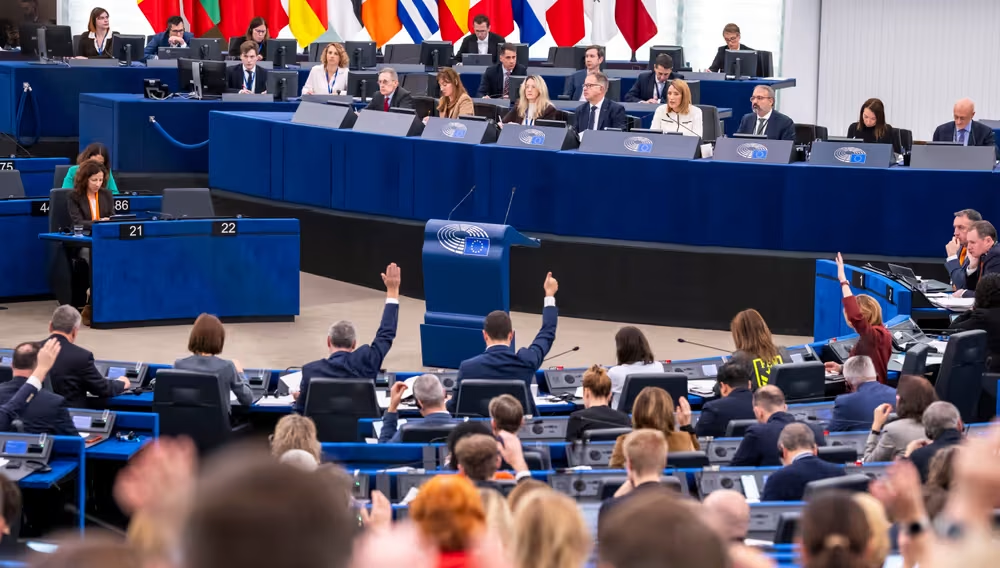
Brussels / Strasbourg, 25 November 2026 – Today, the European Parliament voted to weaken the EU’s rules governing the environmental release of genetically modified microorganisms (GMMs), despite warnings from scientists and environmental organisations about the risks this could pose to people and ecosystems. The effects of releasing these organisms are particularly difficult to predict, monitor or reverse, given the enormous gaps in scientific knowledge about microbial life.
Franziska Achterberg, Head of Policy at Save Our Seeds, said:
Genetically modified microorganisms can multiply, spread, exchange genetic material and interact with ecosystems we still understand only imperfectly. Weakening the EU’s existing safeguards would undermine the very mechanisms we need to identify and address potential harm, effectively allowing an uncontrolled experiment in nature.
Nature is no laboratory. Before genetically modified microbes enter ecosystems, we must be able to assess, trace and monitor them. The precautionary principle, not industry timetables, must set the pace.
Background
In December 2025, the European Commission proposed to dismantle some of the existing GMO rules for GMM products released into the environment. Under the legislative proposal, GMMs would be subject to a lighter pre-market risk assessment, and requirements for detection methods and post-market monitoring could be waived in some cases. EU authorisations would no longer be reviewed regularly but would instead be valid for an unlimited duration. The authorisation of certain GMMs would be fast-tracked based on the basis that they meet certain ’low risk’ criteria.
The European Parliament, whilst agreeing on the principle of weakening existing safeguards, voted today to retain some important protections. MEPs voted to maintain detectability and post-market monitoring for all EU-authorised GMMs, and to review all EU GMM authorisations after an initial ten-year period, with open-ended authorisation possible only at the first renewal. They also voted to narrow the range of GMMs eligible for fast-track authorisation and to allow national bans on EU-authorised GMMs.
Scientists from across Europe have warned against lowering EU safety standards for the environmental release of GMMs. These include scientists from the Federation of German Scientists (VDW), the European Ecological Federation and the European Network of Scientists for Social and Environmental Responsibility (ENSSER). Scientists from several French institutions have also urged the EU to suspend discussions on the proposal in an appeal published in the French newspaper Le Monde (English version).
Environmental and agricultural organisations from several European countries have launched a joint petition against the release of GM microorganisms into nature without robust safeguards.
Next steps
The European Parliament, the Council and the European Commission will now enter trilogue negotiations to agree on the final text of the legislation. The Council of Ministers adopted its General Approach on 16 June 2026.
Contact: Franziska Achterberg – Head of Policy and Advocacy at Save Our Seeds, +32 498 362403,
Save Our Seeds is a campaign run by the Foundation on Future Farming. Since 2002, it has successfully spearheaded efforts to avoid GMO contamination of seeds and maintain precautionary GMO legislation at national and EU levels. Current campaigns also include efforts to Stop Gene Drives.
Photo © European Union, 2026